

A Scientific Exploration by Birla Balika Vidyapeeth, Pilani
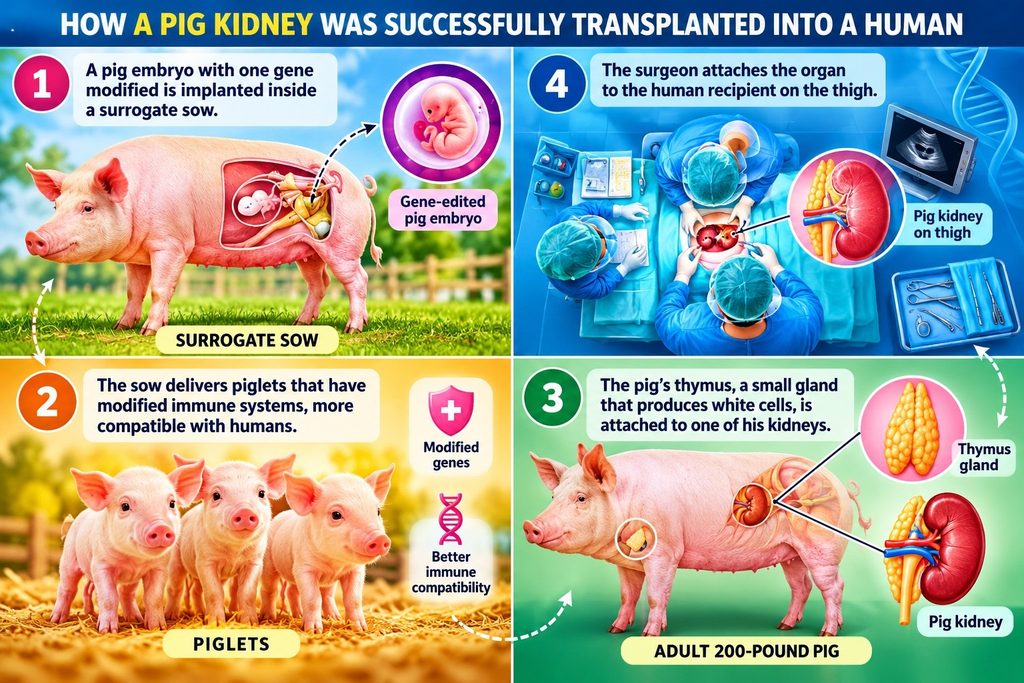
Can an animal organ save a human life? Xenotransplantation explores this possibility through the transplantation of animal organs, particularly genetically modified pig organs, into humans. This emerging field of biotechnology offers hope for addressing the shortage of donor organs, while presenting challenges such as immune rejection, infection risks, and ethical concerns.
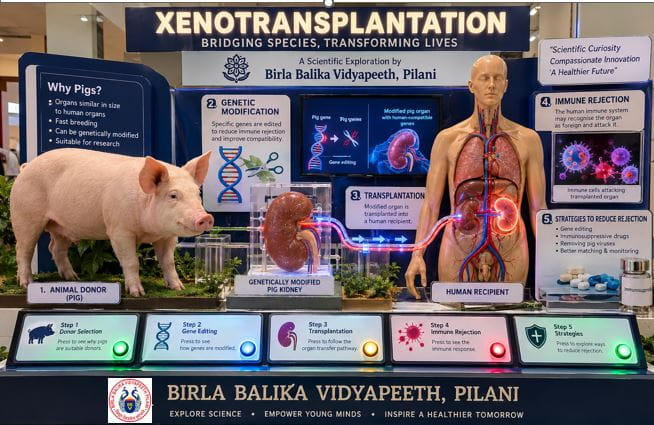
At Birla Balika Vidyapeeth, Pilani, this interactive science exhibition brings classroom learning to life by connecting genetics, immunology, and biotechnology with cutting-edge medical research. Through a working model, students demonstrate how genetic modification may improve organ compatibility, how the immune system responds to foreign organs, and how scientists are working to reduce rejection.
🔬 Interactive Model: How Does Xenotransplantation Work?
- Donor Selection: Identify a pig as a potential organ donor.
- Genetic Modification: Explore how gene editing may improve organ compatibility.
- Transplantation: Follow the pathway showing the organ transferred to a human recipient.
- Immune Rejection: Activate a red light to represent the body’s immune response.
- Scientific Solutions: Activate a green light to illustrate strategies to reduce rejection.
Key Learning: Xenotransplantation combines genetics, biotechnology, and immunology to explore new possibilities for life-saving treatments.🧬 Why is it Important?Thousands of patients worldwide need organ transplants, while suitable human donor organs remain limited. Scientists are using genetic engineering to modify pig organs so that the human immune system is less likely to reject them. Recent experimental transplants involving genetically modified pig kidneys and hearts have marked significant milestones in this rapidly developing field. 🐷➡️🫀➡️👤
⚖️ Challenges Ahead Xenotransplantation still faces major challenges, including immune rejection, infection risks, long-term organ survival and ethical considerations. Careful clinical research and monitoring are therefore essential.
✨ The Future of Transplant Medicine From genetic engineering to transplantation, xenotransplantation beautifully demonstrates how biology, biotechnology and medicine converge to address human challenges.
The project reflects BBV’s commitment to nurturing scientific curiosity, hands-on learning, and empowering young women to explore innovations that may shape the future of healthcare.
Discover the science. Experience the innovation. Imagine the possibilities.
🔬 “When scientific curiosity meets compassion, innovation can give hope a new heartbeat.” 💙
By: Gargi Kashyap, Grade XII
#Xenotransplantation #Biotechnology #GeneticEngineering #OrganTransplantation #MedicalScience #FutureOfMedicine #ScienceForHumanity #BiologyBeyondBooks
Leave a Reply